Philippine Embassy conducts art workshop with Filipino youth for National Arts Month
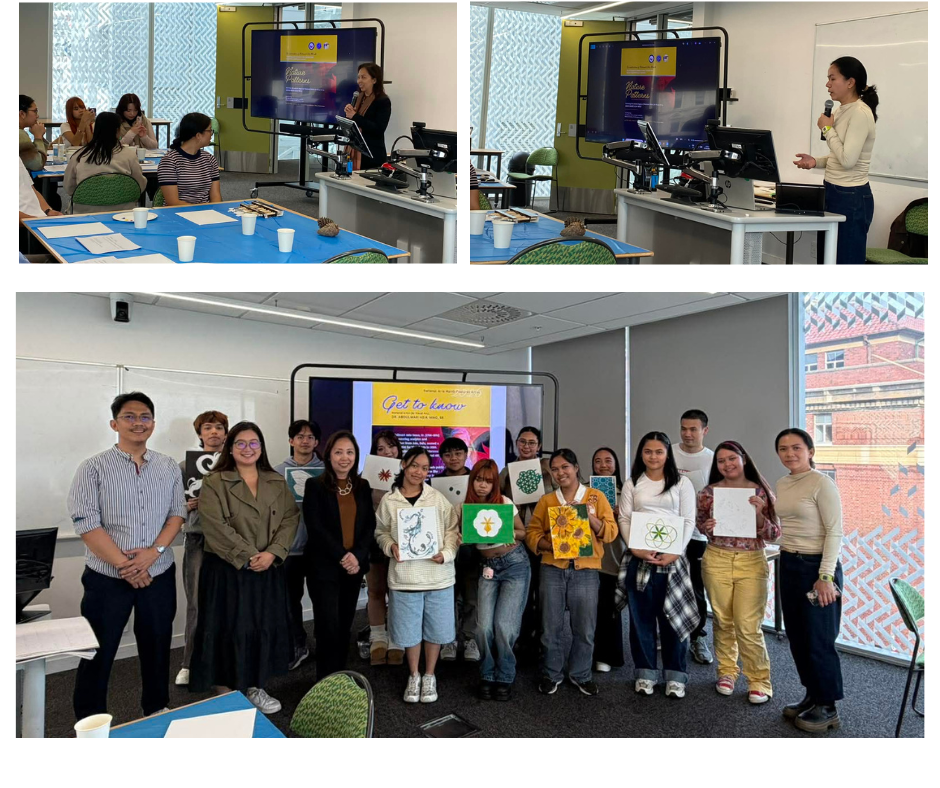
- Ambassador Kira Azucena underscored the vital role of arts in shaping young people’s understanding of their national identity and in preserving Philippine cultural heritage.
- Ms. Fara Manuel, Wellington-based Filipino artist and workshop resource person, focused on the distinctive techniques of Philippine National Artist for Visual Arts Dr. Abdulmari Imao, particularly his integration of indigenous motifs and Islamic folk art traditions from Mindanao
- Ambassador Kira Azucena (third from the left) andVice Consul Mark Athony Articulo (leftmost) together with Ms. Fara Manuel (rightmost) and participants. The workshop was in collaboration with the Filipino Students Association of Victoria University (FSA).
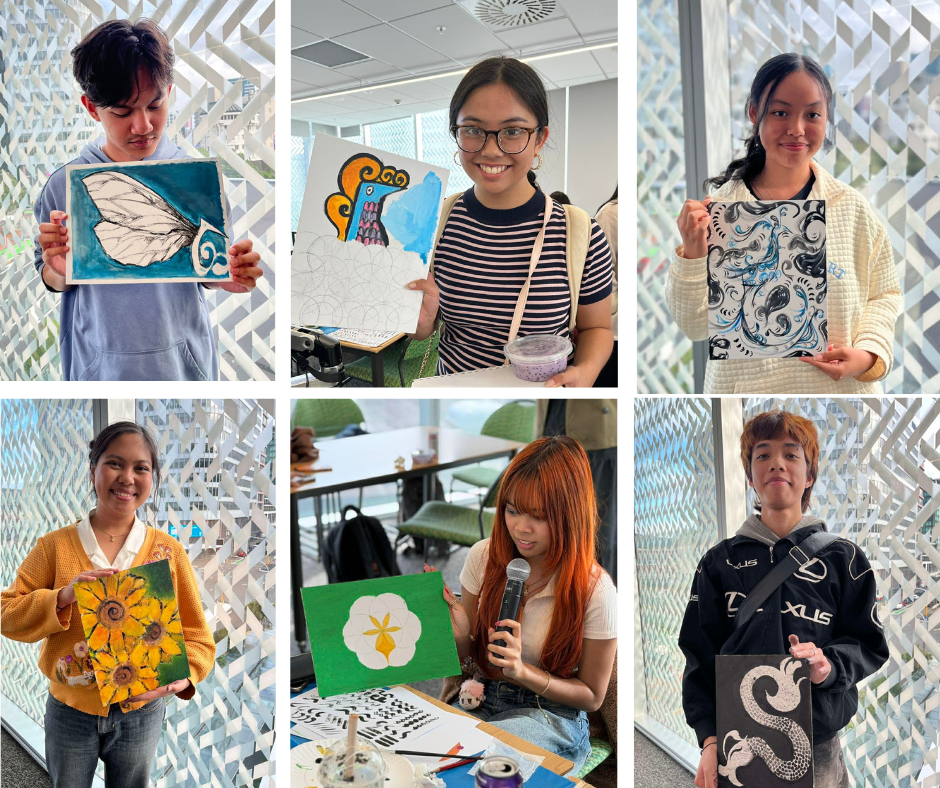
Students’ proudly showed their artworks after the workshop
WELLINGTON 27 February 2026 - The Philippine Embassy in New Zealand organized an art workshop titled “Nature Patterns: An Art Workshop on Drawing and Stylization Inspired by the Art Practice of Abdulmari Asia Imao Sr., National Artist for Visual Arts” on 27 February 2026 at Victoria University of Wellington in celebration of National Arts Month.
The initiative was undertaken in collaboration with the Filipino Students’ Association (FSA) of Victoria University of Wellington and conducted by Ms. Fara Manuel, a PhD candidate in Design at Massey University. The activity forms part of the Embassy’s continuing cultural diplomacy efforts aimed at strengthening Filipino identity and promoting Philippine arts among the youth, particularly second-generation Filipinos in New Zealand.
During the opening program, Ambassador Kira Christianne D. Azucena underscored the vital role of arts in shaping young people’s understanding of their national identity and in preserving Philippine cultural heritage. She emphasized that artistic platforms such as this workshop provide meaningful opportunities for cultural and creative expression. Participants were also encouraged to maximize such opportunities to cultivate pride in their heritage and to contribute actively to the Filipino community’s engagement in their host country.
Ms. Manuel introduced participants to a stylized approach to art that bridges realism and abstraction. Her lecture highlighted the distinctive techniques of Dr. Imao, particularly his integration of indigenous motifs and Islamic folk art traditions from Mindanao. She also discussed Maguindanawon art, known for its dynamic forms, intricate patterns, and bold, vibrant colors. Emphasis was also placed on stylization as a creative process closely linked to pattern-making and elements of sacred geometry.
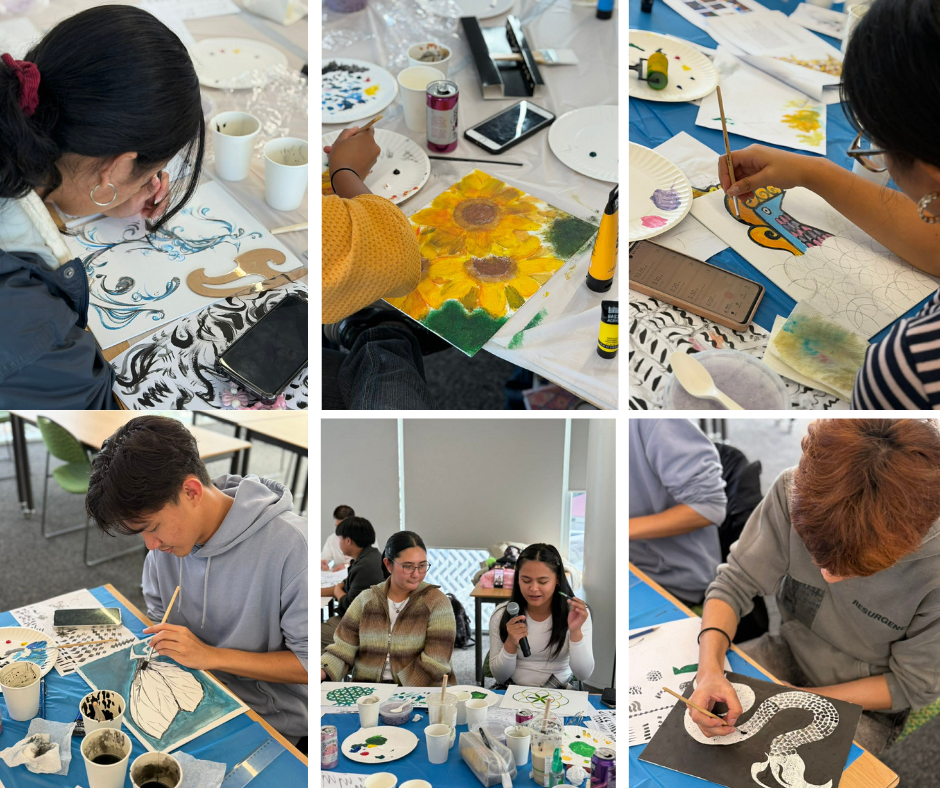
In the art session, Ms. Manuel encouraged students to experiment with irregular shapes and expressive colors that evoke emotion, suggest movement, and challenge conventional symmetry. Participants were guided to combine fundamental geometric forms such as squares, circles, and triangles to establish structural balance, while integrating organic, abstract, and unconventional shapes inspired by nature. The workshop was warmly received by the students, who conveyed their appreciation for the opportunity to engage not only with the Embassy but, more significantly, to deepen their understanding of Philippine traditions and cultural heritage. Participants noted that the activity provided a meaningful space for reflection, creativity, and cultural connection. END