
The Sampaguita: A Symbol of 50 Years of the Treaty and Amity Cooperation in Southeast Asia
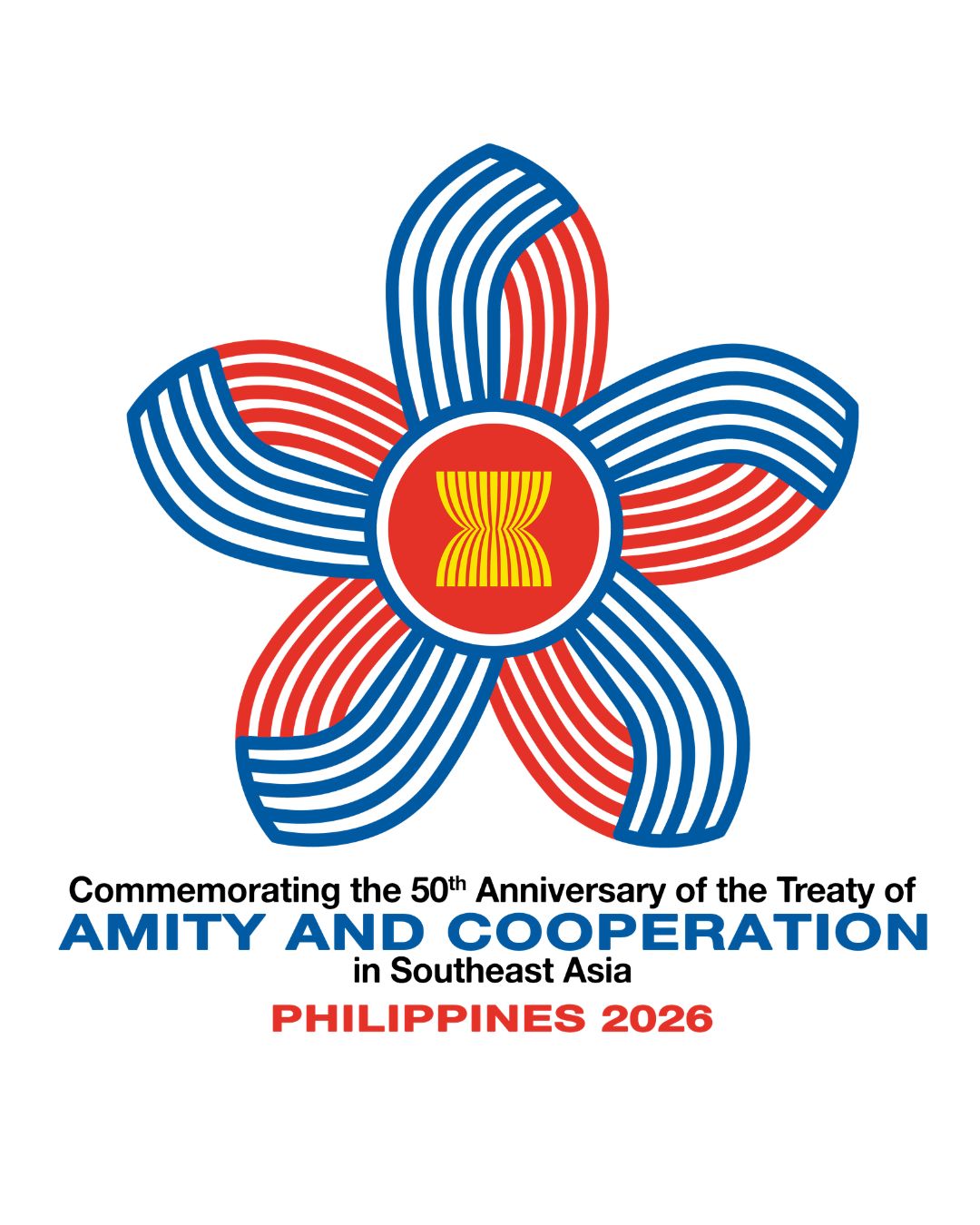
The emblem of the 50th Anniversary of the Treaty of Amity and Cooperation in Southeast Asia (TAC) features the Sampaguita (Jasminum sambac), the national flower of the Philippines.
In Filipino culture and traditions, the Sampaguita is traditionally woven into garlands and offered to guests and dignitaries as a gesture of hospitality. In religious settings, the flower’s white petals symbolize purity, while its lasting fragrance suggests devotion. The Sampaguita is a symbol of friendship, purity of intention, humility, hope, and a warm welcome—values that closely resonate with the spirit and enduring relevance of the TAC.
Philippine folklore also suggests that the term “Sampaguita” is derived from Filipino phrases “sumpa” and “kita” which translates to “I promise you”, a solemn pledge of mutual respect and love.
In this context, the 50th Anniversary of the TAC traces its emblem from the symbolisms of the Sampaguita, reflecting its values and cultural relevance in the Philippines. At its core is the new ASEAN emblem that features the 11 rice stalks representing the 11 ASEAN Member States which signifies ASEAN Centrality and unity. This represents ASEAN as a key driving force in shaping and leading the evolving regional architecture to remain open, transparent, inclusive and rules-based that upholds international law.
The five petals of the flower illustrate the five decades of unwavering collective commitment to the Treaty’s fundamental principles of mutual respect for sovereignty and territorial integrity, non-interference in internal affairs, peaceful settlement of disputes, renunciation of the threat or use of force, and effective cooperation amidst shifts in the geopolitical and socio-economic landscape. The five-petaled form also signifies the five continents from which the 58 High Contracting Parties (HCPs) of the TAC to date originate: Asia, Americas, Africa, Europe and Oceania, coalescing through ASEAN and affirming the breadth and growing reach of the Treaty.
The 50 strokes forming the Sampaguita petals demonstrate fifty years, with each stroke representing year after year of the Treaty’s enduring appeal as a foundational code of conduct for inter-state relations in the region for peaceful relations, mutual respect, and cooperation in the region and a cornerstone of regional peace and stability. The flowing lines of the flower signify continuity, reflecting TAC’s sustained relevance and its continued acceptance of new High Contracting Parties.
With the prominence of Sampaguita at the core of the commemorative identity of the TAC, the Philippines offers a visual expression of hospitality and goodwill, extending a message to the region and the world: peace is nurtured through respect, and cooperation flourishes through trust.